
In moments of crisis, some people rush to explain.
Others choose to listen.
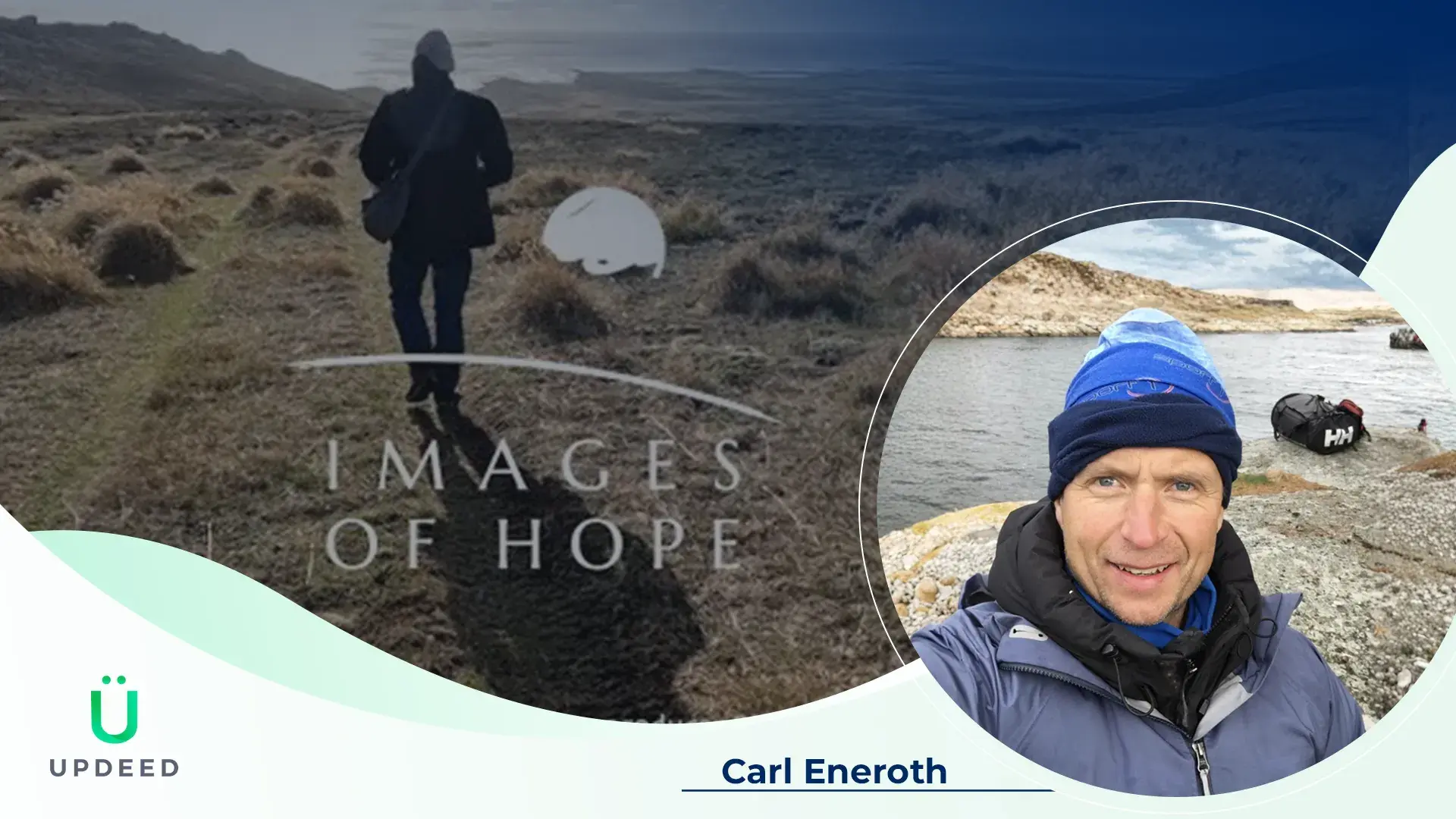
Carl Eneroth belongs firmly to the latter.
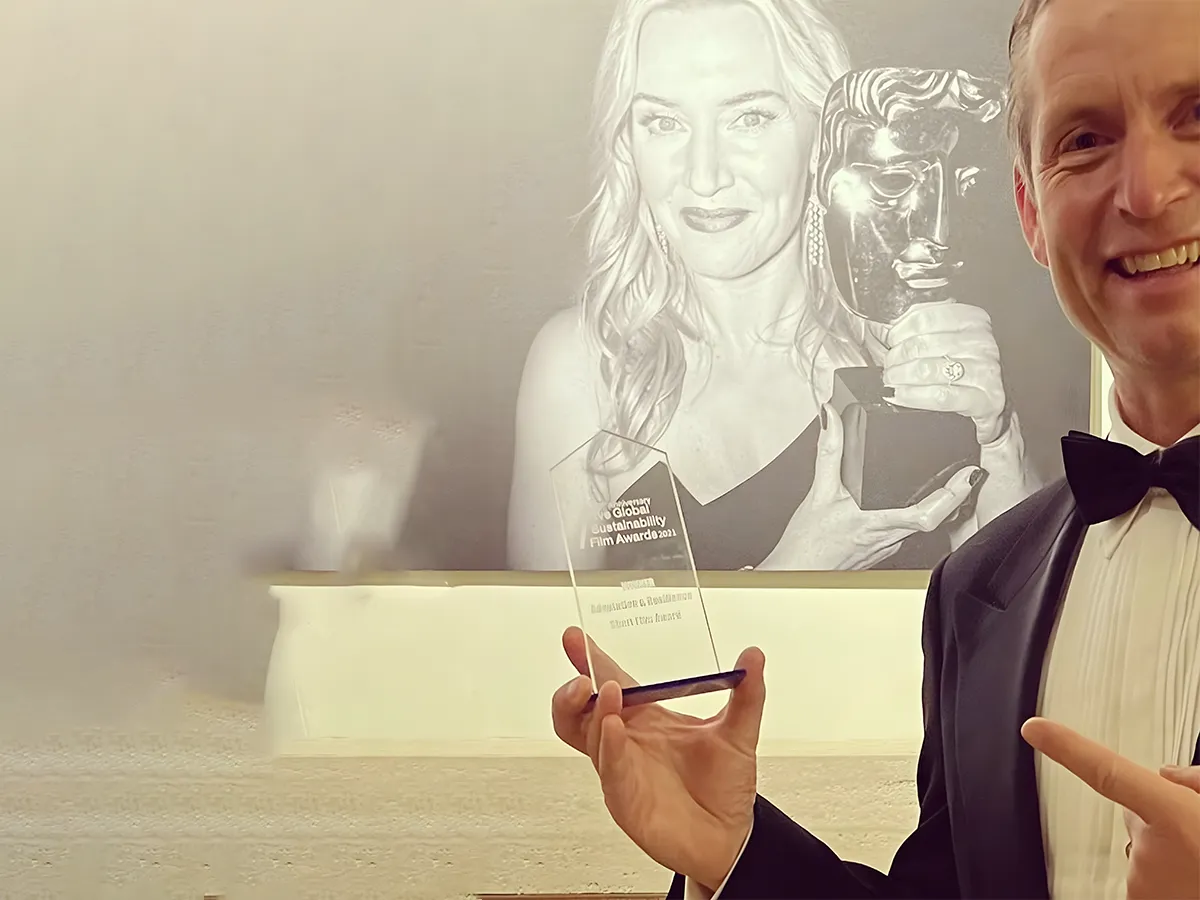
Carl Eneroth is a filmmaker, photographer, podcast producer, and founder of Stories that Unite Us under Stockholm Social Innovation Lab (SSI Lab), a creative studio producing documentaries, films, and social impact projects. Through his works, he has earned 38 awards with the most recent win being Best Short Documentary for “Images of Hope” (2024) in London Movie Awards.
Working at the intersection of documentary storytelling, circular business innovation, and dialogue-based societal work, Carl’s practice is shaped by tension: dominance versus cooperation, speed versus resilience, control versus legitimacy. These are not abstract themes for him, they surface daily in climate negotiations, geopolitical conversations, and the fragile spaces where democracy is tested.
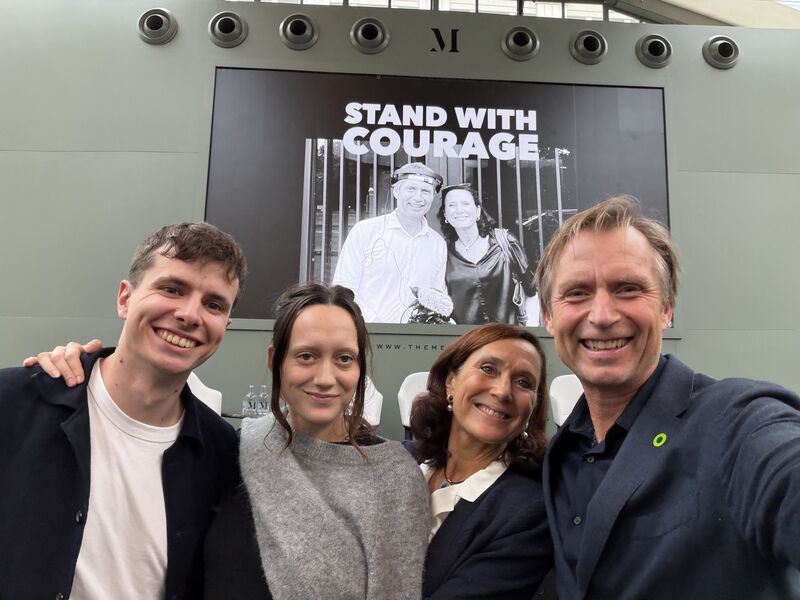
Today, Carl along with Stockholm Social Innovation Lab collaborates with We Don’t Have Time, the world’s largest climate action platform, acting as what he calls a “roaming camera.” He travels to places where climate, security, and power are actively being negotiated COP meetings, Davos, Munich, Paris, Bonn not to comment or persuade, but to document, listen, and make perspectives visible.
Alongside this work, Carl produces independent documentaries that focus on societal transformation and the people who operate just outside the spotlight: conveners, thinkers, artists, soldiers, helpers, and community leaders. Across vastly different roles and environments, he returns to the same underlying question:
How do we live together when the systems around us are under pressure?
Below, Carl reflects on his journey in his own words.
Tell us a bit about your background
Today I work across several intersecting fields: documentary storytelling, circular business innovation, and dialogue-based work around societal resilience. My projects often explore tensions such as dominance versus cooperation, speed versus resilience, and control versus legitimacy—questions that cut across climate, democracy, and human relationships.
I collaborate with We Don’t Have Time, the world’s largest climate action platform, where I work as a roaming camera—travelling to places where climate and security are actively being discussed: COP meetings, Davos, Munich, Paris, Bonn. My role is not to comment, but to listen, document, and make perspectives visible.
Alongside this, I produce independent documentaries on themes that matter to me: societal transformation, voices behind the scenes, and how people organise meaning under pressure—leaders, conveners, weavers, thinkers, artists, soldiers, and helpers. Different expressions, same underlying question: how do we live together when the ground is shifting?
What first inspired you to begin this journey?
The turning point was the 2016 US election. It made visible the growth of an authoritarian movement that stood in stark contrast to the democratic system I believe in—while also forcing me to confront democracy’s blind spots, including those left behind by globalisation.
Faced with that tension, my choice became clear: I believe in rule-based cooperation rather than strongman leadership. Not because democracy is perfect, but because it allows correction, plurality, and learning. Storytelling became my way of engaging with that choice—not as argument, but as exploration.
What has been one of the most defining challenges you faced?
Every day is a challenge. I’ve learned by doing—failing fast, experimenting, and adjusting. Building a sustainable creative practice is an imaginative journey where you rarely know in advance what will work.
One key lesson I call the spill-over effect. Instead of pushing endlessly for permission or approval, I choose a large societal question, set my own direction, and act. I move quickly, create something tangible—a film, a podcast, a screening—and let that work speak for itself. Unexpected opportunities then emerge from the side.
This approach has sustained my work for over ten years. The lesson is simple but not easy: follow your ideas, invite people along, and stay open. Something tends to happen.
What impact do you feel your work has created so far?
Impact comes in many forms. Sometimes it’s as small—and as large—as one person feeling heard.
I think of an Indigenous leader at COP 30 in Belém, Brazil, who broke through the diplomatic perimeter and ended up on global front pages. Sitting down with him, hearing him describe how his community was being overridden by state-sanctioned commercial interests while leaving little behind, and then sharing that story with millions through the We Don’t Have Time network—that mattered.
But impact isn’t about scale alone. It’s about quality. One conversation at a time. Everyone counts. That process also gives me meaning and a sense of belonging. The work becomes a mirror: what I offer others is often what I’m learning myself.
What is your vision for the future?
This year, my focus is on strengthening a European response to pressures from both East and West. That means exploring how resilience is built in practice—financially, socially, technologically, environmentally, and in terms of trust.
I want to stand up for plural democracy and human rights within planetary boundaries, not as slogans but as lived systems. What are the actual building blocks of cooperation in a time of overlapping crises? That’s something I want to explore together with others.
What message would you share with others who want to create positive change?
Start where you are—and think big.
Do something you’re already good at, something that comes naturally. Get better at it. Work on it every day. Then place that small skill into the largest context you can imagine.
Even if it doesn’t work. Even if the results are modest. If your small contribution helps shift a larger system, you are already moving. It may take ten years, twenty years, or a generation. But you’re on your way. And that is a wonderful place to be.
The journey is the goal. Life is an experience.
UPDEED Reflection
Carl Eneroth’s work reminds us that not all impact is loud. Some of the most consequential change begins with listening especially in rooms where power, fear, and urgency collide.
By choosing documentation over debate and curiosity over certainty, Carl creates space for voices that might otherwise be erased. His approach challenges the idea that influence requires authority; instead, it shows that attention, patience, and presence are forms of leadership.
At UPDEED, we spotlight changemakers like Carl because they help us see systems more clearly, how they fracture, how they heal, and how cooperation can still be practiced under pressure. His work invites us to slow down, pay attention, and participate more consciously in shaping the future we share.